
Categories
Business Hippie Way

be the CEO of your own life

Do you ever feel like you are not in control of your own life? Like you are just following someone else’s agenda, or reacting to whatever comes your way? Do you wish you could have more clarity, purpose and direction in your life?

If you answered yes to any of these questions, then this blog post is for you. In this post, I will share with you some tips on how to be the CEO of your own life. Being the CEO of your own life means that you are the one who sets the vision, goals and strategies for your life. You are the one who makes the decisions and takes the actions that align with your values and passions. You are the one who leads yourself and others towards a sustainable future.

Why is this important? Because we are living in a time of unprecedented challenges and opportunities. We are facing a global crisis that requires a human transformation. We need to shift from individualistic behavior towards a collective effort. We need to look at the (business) world with a holistic mindset. We need to create solutions that are good for people, planet and profit.

But we cannot do this alone. We need conscious leaders who are capable and willing to come up with ideas and actions to lead us out of this mess. We need courageous thinkers who can challenge the status quo and inspire others to do the same. We need brave do-ers who can execute their vision and make an impact.

Are you one of these conscious leaders? Are you ready to be the CEO of your own life?

If so, here are some steps you can take to start your journey:

  1. Define your vision. What is your purpose in life? What do you want to achieve? What kind of legacy do you want to leave behind? Write down your vision statement and keep it somewhere visible. Or watch our intro video on finding your values
  2. Set your goals. Based on your vision, what are the specific, measurable, achievable, relevant and time-bound goals that you want to accomplish? Break them down into short-term and long-term goals and prioritize them according to importance and urgency.
  3. Create your strategies. How will you achieve your goals? What are the actions that you need to take? What are the resources that you need? What are the obstacles that you might face? How will you overcome them? Plan your strategies and schedule them in your calendar.
  4. Take action. Now that you have your plan, it’s time to execute it. Follow through on your commitments and track your progress. Celebrate your wins and learn from your failures. Adjust your plan as needed and keep moving forward.
  5. Lead yourself and others. Being the CEO of your own life also means that you are a leader for others. You can influence, inspire and empower others to join you in your mission. You can share your vision, goals and strategies with them and invite them to collaborate with you. You can also seek feedback, support and guidance from others who can help you grow. So join our Club on LinkedIn to share and inspire others.

By following these steps, you can be the CEO of your own life. You can take charge of your destiny and make a difference in the world. You can be a conscious leader who creates a sustainable future for yourself and others.

Are you ready to take this challenge? If so, let me know in the comments below what is your vision, goals and strategies for being the CEO of your own life.

create (y)our ideal world!

Categories
Business Hippie Way

work-life

In this text, I will explore some of the challenges and opportunities that we face in our work and life in the 21st century. I will argue that we need to be more critical, vulnerable and authentic in our communications, and more conscious and collaborative in our actions. I will also suggest some ways to create a social economy that values human well-being and happiness over money and status.

One of the challenges that we face is to gain new insights by being critical of what’s happening around us and inside us. We often take things for granted or accept them as they are, without questioning their validity or impact. We need to be more curious and open-minded, and challenge the assumptions and norms that shape our reality. We also need to be more aware of our own feelings, thoughts and motivations, and how they influence our decisions and behaviors. We need to be honest with ourselves and others, and acknowledge our strengths and weaknesses.

Another challenge is to be vulnerable in our communications. Vulnerability means to expose ourselves to the risk of being hurt or rejected, but also to the possibility of being seen and accepted as we are. It means to share our emotions, opinions and experiences with others, without hiding or pretending. It means to listen empathically and respectfully to others, without judging or interrupting. It means to seek feedback and learn from others, without being defensive or arrogant. Being vulnerable can help us build trust, understanding and connection with others.

A third challenge is to stay true to our own self. This means to act in alignment with our values, beliefs and goals, and not to compromise them for external rewards or pressures. It means to express our uniqueness and creativity, and not to conform to the expectations or standards of others. It means to pursue our passions and interests, and not to settle for less than what we deserve. Staying true to ourselves can help us find meaning, fulfilment and happiness in our work and life.

However, staying true to ourselves also requires us to think about and make choices about our work and life standards. We need to ask ourselves: What do we want from our work? Is it money or fulfilment? Do we strive for success or happiness? How do we define success and happiness? How do we balance our work and life? How do we cope with stress and burnout? How do we deal with change and uncertainty?

These questions are becoming more relevant as the world is changing rapidly and unpredictably. The old securities that we used to rely on after the war, such as pension, income, status, fixed position etc., are diminishing or disappearing. The traditional system of work that treats people as production tools is failing us. A large percentage of workers is not finding satisfaction in their work. Many employees don’t like their job or feel trapped in it. Many people develop coping mechanisms to survive, such as escapism, addiction or denial. As a result, we experience more stress, anxiety, depression and other mental health issues.

We need a new system of work that respects people as human beings. A system that allows us to grow, learn and contribute as individuals and as a society. A system that fosters collaboration, innovation and diversity. A system that creates value for all stakeholders, not just for shareholders. A system that supports a social economy.

A social economy is about working together for the common good. It is about putting people before profit. It is about creating products and services that solve real problems and improve lives. It is about measuring success by the level of happiness and well-being of everyone everywhere.

To create a social economy, we need a new utopia. We need a new vision of how we want to live together in harmony with ourselves, each other and nature. We need new conscious leaders who can inspire us with their values, actions and stories. We need different community models that are initiated by the people themselves.

We also need a new mindset. We need to stop following the system like sheep because it gives us a false sense of security and convenience. We need to stop feeling guilty if things are not going as expected because it is not our fault but the system’s fault. We need to stop being motivated by money, status or materialism because they do not bring us lasting happiness.

We need to start taking responsibility for our own lives and happiness. We need to start being more proactive, creative and courageous in pursuing our dreams. We need to start being more compassionate, generous and grateful in sharing our gifts with others.

a better (business) world starts with you!

Categories
Business Hippie Way

revolt!

We live in a time of crisis and uncertainty. A time when the system that governs us is failing to meet our needs and aspirations. A time when we feel powerless and voiceless. But we are not alone. We are not helpless. We are not hopeless. We have the power to change the system, to revolt against the status quo, to create a new reality.

We have to make changes by starting with little protests. By making it visible where the power lies. By telling stories about successful transformations. By using the system in a different and just way. By working together on what we want, as real human beings. By bringing back the human aspect in our work. By saying no to what’s there and saying yes to what we desire.

What is our Utopia? We don’t want a job or work, we want food, a house, and other basic needs. So what are the alternatives? Who represents us these days? Is it the politicians? The employers? The church? Do we want strong leaders to guide us, or should we take the lead ourselves? Should we re-shuffle power and have communities with their own chosen leaders? Communities based on a common interest and goals? Where trust and purpose are a natural cause for living together?

We are too much dependent on elements of a system that is not ours anymore. The obvious securities of the past are not valid anymore. Which of these securities do we still want in this ever-evolving society? What do we need as a community to protect our common interests?

Let’s be more critical and not depend on what’s offered to us, but look at alternatives and different scenarios. Nothing is obvious anymore, question everything. Change is mandatory, revolt is necessary, utopia is possible.

create (y)our ideal world!

Categories
Business Hippie Way

work: a choice or a right?

Many people today are faced with a dilemma: should they work for money or pursue a more fulfilling and meaningful life without work? Work is often seen as a necessary evil, a way to earn a living and pay the bills. But is it really the only option? And what does work mean for our happiness and well-being?

WORK AS A CHOICE

Some people argue that work is a choice, not an obligation. They believe that we have the freedom to decide what kind of work we want to do, how much we want to do it, and when we want to do it. They see work as an expression of our creativity, passion and purpose. They claim that work can bring us joy, satisfaction and growth as human beings.

According to this view, work is not something that we have to do, but something that we want to do. Work is not a burden, but a blessing. Work is not a source of stress, but a source of happiness.

WORK AS A RIGHT

Others argue that work is a right, not a privilege. They believe that everyone deserves to have access to decent and dignified work that provides them with income, security and social recognition. They see work as an essential part of our human dignity and social inclusion. They claim that work can protect us from poverty, inequality and exclusion.

According to this view, work is not something that we can choose or refuse, but something that we need and demand. Work is not an option, but an entitlement. Work is not a luxury, but a necessity.

WORK IN CRISIS

However, both views face some challenges in the current context of economic and social crisis. The global pandemic has disrupted many sectors of the economy and caused massive unemployment and underemployment. Many people have lost their jobs or seen their incomes reduced drastically. Many others have been forced to accept precarious or exploitative working conditions or risk their health and safety on the frontlines.

At the same time, the traditional model of work based on money, status and materialism is being questioned by many people who are looking for more balance, meaning and well-being in their lives.

A NEW PARADIGM FOR WORK

So how can we reconcile these different perspectives on work? How can we create a new paradigm for work that respects both our choice and our right to work? How can we make sure that everyone has access to decent and fulfilling work in a changing world? One possible answer is to adopt a more holistic and humanistic approach to work. An approach that recognizes that work is not only about money, but also about goods, services, knowledge, culture, care, community and environment.

An approach that values not only productivity, but also creativity, cooperation, diversity, solidarity and sustainability. An approach that empowers not only employers, but also workers, consumers, citizens and stakeholders. Such an approach would require us to rethink our economic system and our social policies to make them more inclusive and democratic. It would also require us to rethink our personal attitudes and behaviors to make them more mindful and compassionate. By doing so, we might be able to transform work from a problem to a solution for ourselves and for society.

create (y)our ideal world!

Categories
Business Hippie Way

your purpose is found in your future

Finding your purpose isn’t that difficult. It just needs some imagination and self knowledge. Here are the three steps to define your purpose.

STEP 1

Start with imagining your ideal world – in 10 years from now. How would this Utopia look like? What would be different and do you see solutions to make this ideal world happen? For example, maybe your ideal world is one where everyone is happy, healthy and wealthy. Maybe you see a world where there is no war, no poverty and no pollution. Maybe you envision a world where humans and animals live in harmony, where technology is advanced and accessible, and where art and culture flourish.

STEP 2

Ask yourself how you can contribute, with all your typical human capacities, to accomplish this ideal world. What would be your role in this story? Which “holy” duty do you see for yourself? How do you want to be remembered? For example, maybe you want to be a leader, a healer, a teacher, a creator, a protector, a supporter or a challenger. Maybe you want to be known for your kindness, your courage, your wisdom, your creativity, your generosity or your humor.

STEP 3

If you have defined your role by now, think about which elements you need to integrate in each part of your life. What would be your daily focus, habits and tasks to fulfill your purpose? For example, maybe you need to learn new skills, meet new people, travel to new places, join new causes, start new projects or change old habits. Maybe you need to prioritize your health, your relationships, your passions, your growth or your impact.

And that’s it! You have just defined your purpose in three easy steps. Congratulations! Now go out there and live it! And remember: finding your purpose is not a one-time thing. It’s an ongoing process that evolves with you. So keep imagining, keep asking and keep integrating. And have fun along the way!

create (y)our ideal world!

Categories
Business Hippie Way

time is now

Many people are publishing articles about the rapid development of technology and how it effects our world. Our life’s are speeding up, time is money in our work, you only live once etcetera. But honestly, we know all this, so let’s look at it from a different perspective. Let’s start with my statement to see if you are critical and awake…

We should skip the time addiction, and eliminate it out of our lives. Time is a tool of our (past) production era, and not applicable (anymore) if we want to be happy in the present.

Hans van de Rakt
  1. Everything we do every day in our (modern) society is based on the clock, and the duration of our efforts. We set our alarm to wake up, and not awakening by the rising sun-light, the annoying and loud rooster, or the biological rhythm of our body.
    We go to our work by train, which is departing at 7:30 precisely. If you’re 30 seconds late you might have a problem. When you finally arrive at work your boss is waiting for you and would spank you, because you took 5 minutes from his time of production, you get the picture, right?
    So there is no natural behavior or flow anymore, we are driven by a mechanism which is invented for a rational reason in the past century, which has nothing to do with (y)our well-being, but with someone else’s needs, interests or advantages.
  2. On a different and perhaps larger scale it is the pace of our societal system. With societal system I point to the political system, the economic system, the cultural system etc.
    Please take also into consideration the high speed of technological developments, which is taking place now. The effect of all technical developments into the different systems is with such great impact and intensity, we sometimes forget to realize the huge effects of it in our systems, in our society and in the end, in our own personal lives.
  3. Under influence of these technical developments, some systems are developing more rapidly than others. This means that some systems are old fashioned, and others have adapted to the new reality.
    For example, the political system is still based on a four-year cycle of elections and decision making, while the economic system is changing every day with new innovations and markets. This creates a mismatch between what people expect from their governments and what they can actually deliver. I call this a asynchrone system flow.
  4. So what can we do to cope with this situation? How can we escape from the time addiction that is imposed on us by external forces? How can we find happiness in the present moment instead of chasing after future goals?
    I think one possible answer is to slow down and reconnect with ourselves and nature. To appreciate the simple things in life that make us feel alive and joyful. To question the assumptions and norms that shape our behavior and values. To find our own rhythm and flow that suits our needs and desires and not that of others.

I hope this article has given you some food for thought and inspired you to think differently about time and its role in your life. Remember that time is not a fixed entity that controls us, but a tool that we can use creatively and wisely. We should skip the time addiction, and eliminate it out of our lives. Time is a tool of our (past) production era, and not applicable (anymore) if we want to be happy in the present.

time is on our side…

Categories
Business Hippie Way

onboarding = expectation management

The hire of new personnel can be daunting. It’s a profession by itself. The HR Manager might fall into the trap that his job is done when the application process is finished. The file of the new employee will be forwarded to the assigned department-head, and case closed. Actually this is the moment where the process starts to a possible win-win situation for both parties; the employer and the employee.

24 % of new hires leave within the first 45 days

The new hire will have expectations about his/her job and tasks, about the typical company organization and culture, about the delivery of tools and support he/she will get. The communication between the two parties should be correct and transparent from the very beginning. So the job advertorial will match the actual (real life) job. The following three elements will give you the insights for good onboarding:

  1. Functional Transparency
  • Job goal: what is the main or big goal of the new job
  • The tasks: which duties and tasks to do
  • The tools/systems will be supplied or are necessary
  • When is the job successful: results, output, time, delivery, (quantitively/qualitive)

2. Organizational Insights

  • What are the rules/regulations in the organization
  • What is the company culture in the sense of values, mission, vision and social tribing
  • How does the organization look like and what is his/her place in this organization

3. Job Support

  • Make E-learning available and relevant to the job
  • Personal Coaching or a buddy system for direct assistance
  • On the job training
  • Who is your first and second line of contact for functional help

40 % of new hires make their decision to leave, during the first 6 months

Onboarding is relevant for employers
A good onboarding program is beneficial for employers as new hires will be more quickly up to speed, and thus productive. Also the involvement and motivation of the employee will be higher. If onboarding is done well, new hires are less likely to leave the company.  

Why employees benefit from good onboarding
Employees will get confirmation of the choice they made for this particular job or company. As they will learn about the company, they will be (more) proud at their new workplace, colleagues, products, etc.

The new hires will get a clear idea on what their role will be. A picture how things run around here, so they are able to navigate in the organization and find their way much easier and with comfort.

Losing an employee in the first year costs about 2,5 times their salary

PRACTICAL TIPS FOR GOOD ONBOARDING

  • Take care of all practical matters as early in the process as possible
  • Put all administration things in the background, as this is only a disturbance during the learning process
  • It should be all about work, and not about all kind of practical details
  • Online learning should be made available as soon as possible and be relevant to their job
  • Present new hires 3 real live cases, so they have a clear picture of what to expect in their job from the beginning
  • Describe the end-goal of the onboarding program
  • Track progress during the onboarding program
  • Know what employees motivates
  • Make all tools, applications, computers etc. direct available and make sure it really works
  • Show them their new workplace so they can visualize themselves being at work

A GOOD ONBOARDING PROCESS WILL BRING QUALITY

PRE-boarding
Before the boarding starts, sent the new hires an overview of the onboarding program. So they know what to expect and get them involved. It will lessen their insecurity and sorrows. This is also a way the employer will show interest in their employees, and that they take their careers serious.

ON-boarding
Appoint an onboarding buddy to accompany them during the process. It’s not only about taking care in a functional way, but especially about their personal development and human wellbeing.

AFTER-boarding
Ask and check about the progress when the boarding program is active and when the program is finished, when they start working in their actual new job. This gives valuable feedback for adjustments.

ONBOARDING IS NOT GIVING THEM A MANUAL OR A COMPUTER. NEITHER A FUNCTIONAL TO DO LIST THEY HAVE TO FOLLOW. IT’S ABOUT A REAL HUMAN EXPERIENCE!

Categories
Business Hippie Way

peace, love and happiness in business

Listen to this blog podcast on Spotify

Trade Necessity

A long time ago when new transportation techniques emerged, it created new jobs like the traveling merchant and local trader. Where you could buy new and different products from other places then your own. There was a natural balance between the buyer and seller because goods or services were exchanged based on necessity.

Business is the new standard

Trade or starting a business has evolved during the last centuries into a “serious” profession. Where all kinds of new business developments were invented like new production techniques, price calculations, ratio’s, KPI’s, and something called “efficiency” Here scarcity was the basis of this trade game.

A Fair Trade

Slowly our view of doing business changed from efficiency towards impact. Where transparency opened our eyes and changed public opinion. This in a sense that trade was not always equal for all parties. Where business ethics became an important factor; doing good for society, giving back to the producers, a sustainable business for a clean environment etc. Where the rational efficiency on short term is not leading anymore, but the soft factors and the impact in a longer period of time, are the new metrics.

the impact in a longer period of time, is the new metric

Business as the new religion

The new entrepreneurs are getting younger and business is initiated by all kinds of people on all levels. New enterprises arise in so many different countries and even in remote locations. Where money is not an issue anymore thanks to Crowdfunding and Microcredit. Entrepreneurship is a commodity. Or is there more to it?

Entrepreneurship seems to be the new religion. The save harbor for a meaningful live and freedom of choice. Where business models are filled with the mantra of Peace, Love & Happiness. Where business people live accordingly to it:
– PEACE: have peace with yourself and with all others
– LOVE: love what you do, and how you do it
– HAPPINESS: experience happiness about the positive impact you bring to others

If you use these three spiritual factors, in your business-life you will make a change to your inner being as to the other humans beings around you.

Categories
Business Hippie Way

WHAT IF… employers apply to candidates

Listen to this blog podcast on Spotify

Since years candidates apply for jobs with employers. Where hundreds of applicants for one position, seems to be the new norm. These large numbers make that most applicants don’t receive an answer at all, or just a standard mail confirmation. And when you are not chosen, a message to all: “we found a candidate who is a better fit”

Besides the impersonal communications, it takes really time and effort for the candidate to do this the right way. The applicant is required to fill in the job portal system with a lot of details of which you might think, why are they asking all these questions, especially in this first contact phase? Anyhow, your personal data is now somewhere in the holy grail of an online job portal. Hoping you will be one of the lucky bastards to be chosen in this job tombola.

WHAT IF… employers apply to candidates

What if…. Employers apply to candidates. In other words candidates have supplied a good CV, made all the personality tests, etc. All made available and where the employer takes the first step. So the first check would be already done at the door.

Are you interested in this position Mr. van de Rakt? Yes, lets’ talk! As the best fit is not only about the past career, but moreover about your personality and if you fit in the organization culture. Combine the human factors (first?) with the rational facts for a bright future together.

Surely there will be disadvantages about this concept, but think about it for a while and discuss it with you colleagues. Let’s come with a disruptive idea to get, in the end, a better solution for the perfect fit between employers and employees. I say” Power to the candidates!

Categories
Business Hippie Way

COMPANY CULTURE IS UNDERRATED

Listen to this blog podcast on Spotify

When we talk about cultural differences we tend to think about differences in national cultures. But being involved in several international projects with people from different backgrounds and sectors, I noticed that even within one country, there are some cultural hurdles to overcome. Within a country differences might occur based on regional heritage, religion, history, local dialects and more.

But there is also something as the Company Culture. If we want know why some businesses are more successful than others, you might think about pragmatic or functional reasons, like a lower price or better technical specifications. But more important, a deal might be rewarded because both parties have a click. Like having the feeling this person, representing this company, will do as they promise. It’s about trust and leveling, based on the same believes.

The Company Culture is about how your organization handles things based on the norms and values in your enterprise. In more detail, it’s about the shared etiquettes, values, visions, rules, customs, beliefs and habits. It’s how your organization works, It’s how you and your colleagues, and in the end the external stakeholders, collaborate. You represent your company culture.

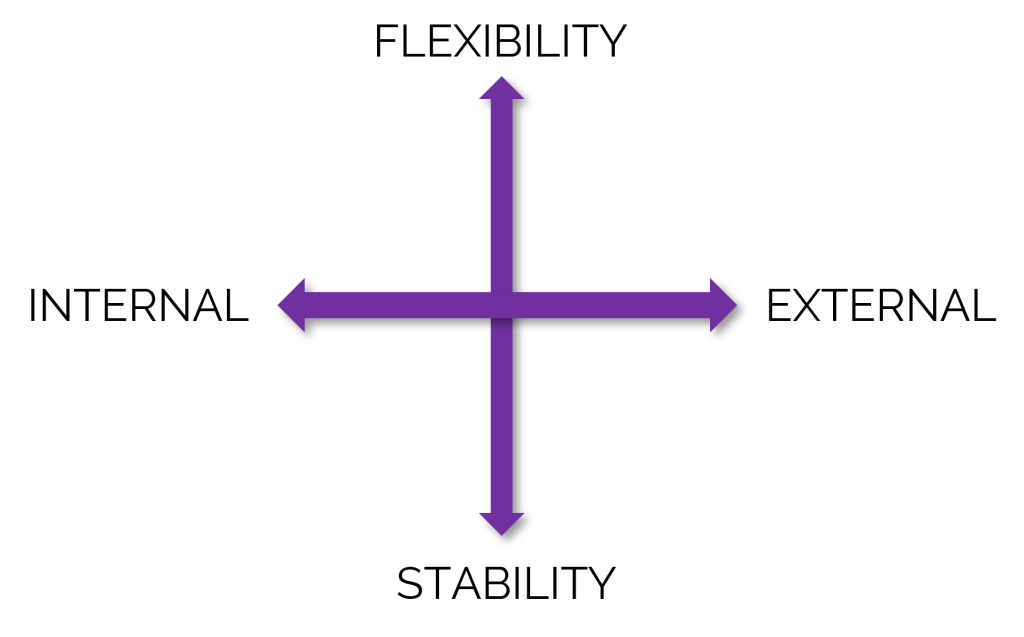
There are a few main drivers and focus points to be recognized in your organization. Is you company internal focused or external oriented? Is your organization open to flexibility and discretion vs. stability and control? What is the culture in your company, can you describe this?

This Company Culture is formed during the history of your company by all people present and by the new people joining your organization. Mostly it follows the changes during time, and is formed unintentionally on a subconscious level. But please know you can influence this culture. By steering your company culture the outcome in business results might be higher as expected. According some studies it can improve results by 200% or more. So why not give your company culture more attention and focus?