Categories
Business Hippie Way

Do crises make us more or less human?

What happens to our humanity when the world feels uncertain – and how crisis can quietly restore our sense of connection, purpose, and care.

We live in a world that feels like a continuous breaking point – socially, economically, environmentally. Yet every crisis also carries a strange gift: the chance to rediscover what makes us human.

Through the lens of quality of life, this reflection explores how disruption can both test and strengthen our shared humanity – and why our response may matter more than the event itself.

Every day brings a new crisis

War, inequality, climate change, disconnection – all competing for our attention and compassion. It’s easy to feel unsettled. But crisis isn’t only about what breaks; it’s also about what wakes us. When the familiar falls away, what truly matters steps forward.

In the first year of the pandemic, global anxiety and depression rose by 25 %, and more than a billion people now live with mental-health challenges.

At the same time, researchers observed something remarkable: catastrophe compassion – a surge of empathy and solidarity. When things fall apart, people reconnect. Neighbours talk again. Communities reorganize. Purpose returns.

And then there’s the invisible layer – the climate syndrome. Nearly six in ten young people feel deep eco-anxiety: a mix of grief and care for a planet in distress. Yet even that shows our capacity to feel / proof that humanity is still alive and responsive.

The Quality of Life perspective

+ Crises shake our conditions – health, stability, safety.
+ They challenge our experiences – how we relate and find meaning.
+ But they can also clarify our values – what we stand for when comfort fades.

Quality of life isn’t defined by avoiding difficulty. It’s defined by how we stay human through it. When we keep caring, connecting, and creating – even in uncertainty – life regains its quality.

So maybe the question isn’t how bad things are, but how awake we choose to be within them. Because every crisis is a mirror. And sometimes, in its reflection, we rediscover the best parts of ourselves.

Reflect

When was the last time a challenge brought out something more human* in you – not less? Share your reflection or join a local CoffeeTalk during the Quality of Life Tour to keep the conversation going.

Because real insight begins in dialogue -and that’s where a better quality of life takes shape.
Categories
Business Hippie Way

conscious living & traveling

Conscious living begins with the awareness that every decision we make impacts not just ourselves, but also the world around us. It’s about living with intention, aligning your choices with your values in a way that promotes well-being for you, others, and the planet.

As this mindset extends into how we travel, it naturally evolves into conscious traveling, where each decision, from where you stay, to how you interact with local communities is a reflection of your values.

Conscious traveling is about more than just the destinations; it’s about embracing a mindful approach to every part of your journey. You begin by asking, “How can I make travel choices that align with a sustainable, respectful, and positive impact?” This might mean choosing eco-friendly accommodations, supporting local businesses, or immersing yourself in cultures in a way that honors and respects traditions.

The doing part of conscious travel is where it all comes together. It’s not enough to simply decide to travel consciously you must take tangible steps to bring those decisions to life. This could be as simple as carrying reusable items to reduce waste or taking the time to deeply connect with local communities. When your decision-making turns into intentional action, travel will not just be about exploration but about growth, connection, and contributing positively wherever you go.

To help you take your conscious living and traveling to the next level, the Conscious Travel Collective by the Business Hippie Club offers a space for travelers committed to making a difference. This community supports each other, travelers, business and governments, in turning intentions into actions, sharing resources, tips, and experiences that make conscious traveling more accessible and impactful.

Whether you’re new to mindful travel or looking to deepen your practice, this collective is your gateway to a more meaningful and responsible travel journey.

Discover how you can join this movement and start your journey towards conscious traveling and doing, by going to the webpage of the conscious travel collective.

Categories
Business Hippie Way

navigating transparency

in the age of Social Media

Growing up in a pre-internet era, transparency was a simple concept. We shared our thoughts and feelings in person, through letters, or over the phone (can you imagine…) Life was private, and boundaries were clear. Fast forward to today, at 64, I’m navigating a world where sharing has taken on a whole new meaning, thanks to social media.

A Personal Turning Point

My introduction to social media was cautious. Initially, I enjoyed reconnecting with old friends and sharing the little things of my life. But as I began sharing more, I felt exposed in ways I hadn’t see coming. Posting the more personal stories brought a lot of responses, yet also a sense of vulnerability. Suddenly, my private life was accessible to all, and the boundaries I once knew were blurred.

Question: did you experience this vulnerability?

The Balance of Authenticity and Privacy

Learning from this experience, I realized the importance of balance. Transparency doesn’t mean revealing every detail of my life. Instead, it means being genuine while setting boundaries to protect my privacy. I now share moments that resonate with my values and can positively impact others, without feeling the need to disclose everything.

Question: do you share anything, without boundaries?

Transparency in Business

When I started my own business, these lessons became invaluable. Transparency with customers and employees about our challenges and successes built a foundation of trust. However, I also recognized the need to keep certain business strategies private to maintain our competitive edge.

Question: Is this still applicable where every piece of information is available?

My Key Takeaways

  1. Selective Sharing: Share what matters and aligns with your values, but protect your real private moments.
  2. Authenticity: Be true to yourself without feeling obligated to overshare.
  3. Boundaries: Establish clear boundaries to maintain your mental and emotional well-being.

Creating a Transparent Community

At the Business Hippie Club, we value the power of transparency and authenticity. By sharing our true selves, we build deeper connections and foster a supportive community. Join us and explore more about living and working consciously, and follow us on LinkedIn or subscribe to these blog posts:

Categories
Business Hippie Way

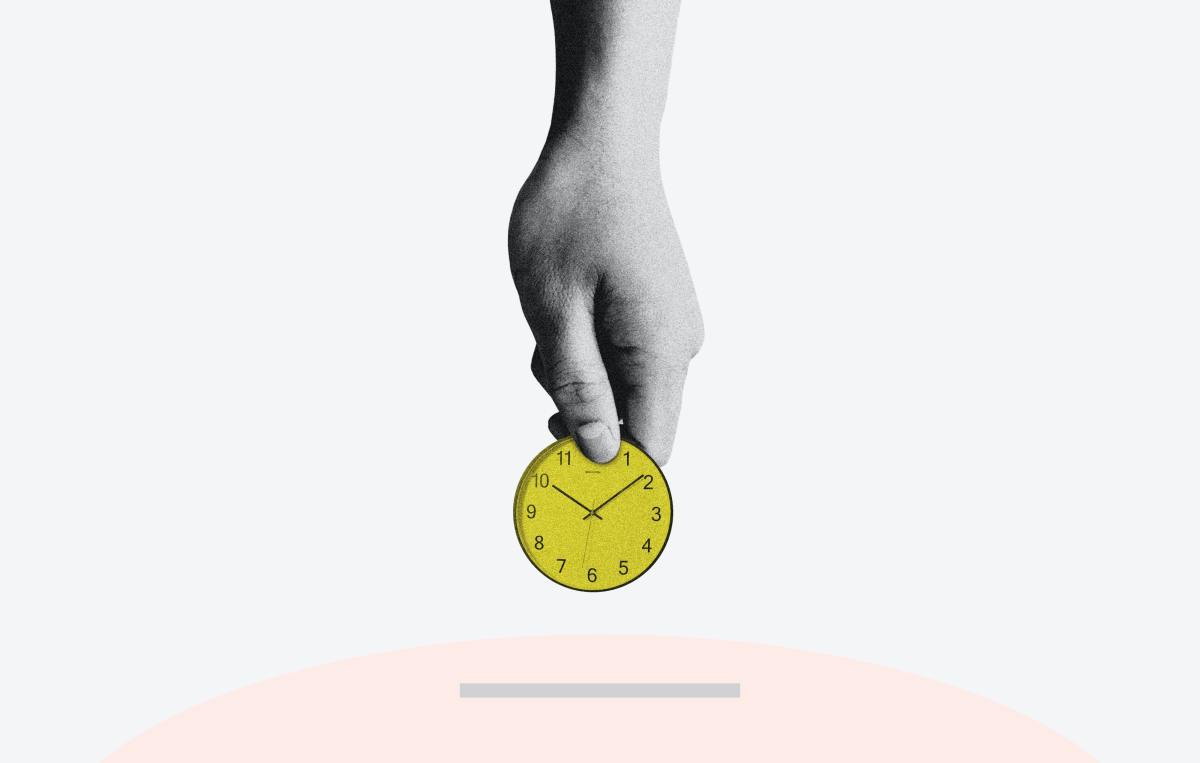
time is now

Many people are publishing articles about the rapid development of technology and how it effects our world. Our life’s are speeding up, time is money in our work, you only live once etcetera. But honestly, we know all this, so let’s look at it from a different perspective. Let’s start with my statement to see if you are critical and awake…

We should skip the time addiction, and eliminate it out of our lives. Time is a tool of our (past) production era, and not applicable (anymore) if we want to be happy in the present.

Hans van de Rakt
  1. Everything we do every day in our (modern) society is based on the clock, and the duration of our efforts. We set our alarm to wake up, and not awakening by the rising sun-light, the annoying and loud rooster, or the biological rhythm of our body.
    We go to our work by train, which is departing at 7:30 precisely. If you’re 30 seconds late you might have a problem. When you finally arrive at work your boss is waiting for you and would spank you, because you took 5 minutes from his time of production, you get the picture, right?
    So there is no natural behavior or flow anymore, we are driven by a mechanism which is invented for a rational reason in the past century, which has nothing to do with (y)our well-being, but with someone else’s needs, interests or advantages.
  2. On a different and perhaps larger scale it is the pace of our societal system. With societal system I point to the political system, the economic system, the cultural system etc.
    Please take also into consideration the high speed of technological developments, which is taking place now. The effect of all technical developments into the different systems is with such great impact and intensity, we sometimes forget to realize the huge effects of it in our systems, in our society and in the end, in our own personal lives.
  3. Under influence of these technical developments, some systems are developing more rapidly than others. This means that some systems are old fashioned, and others have adapted to the new reality.
    For example, the political system is still based on a four-year cycle of elections and decision making, while the economic system is changing every day with new innovations and markets. This creates a mismatch between what people expect from their governments and what they can actually deliver. I call this a asynchrone system flow.
  4. So what can we do to cope with this situation? How can we escape from the time addiction that is imposed on us by external forces? How can we find happiness in the present moment instead of chasing after future goals?
    I think one possible answer is to slow down and reconnect with ourselves and nature. To appreciate the simple things in life that make us feel alive and joyful. To question the assumptions and norms that shape our behavior and values. To find our own rhythm and flow that suits our needs and desires and not that of others.

I hope this article has given you some food for thought and inspired you to think differently about time and its role in your life. Remember that time is not a fixed entity that controls us, but a tool that we can use creatively and wisely. We should skip the time addiction, and eliminate it out of our lives. Time is a tool of our (past) production era, and not applicable (anymore) if we want to be happy in the present.

time is on our side…

Categories
Business Hippie Way

WELL-BEING INEQUALITY

Listen to this blog podcast on Spotify

What matters more: the greatest overall happiness, or the happiness of the greatest number? This question has concerned philosophers for centuries.

It is easier to talk about income differences (inequality) then about more subjective items as feelings about happiness.

Most conversations about development these days focus on income inequality and people’s wellbeing. But analysis suggests these conversations might be better focused on the inequality in people’s wellbeing. There are three reasons for that:

  1. Polarization

Data show that worldwide, with every passing year since the Great Recession, life has gotten better for people with wellbeing scores in the top 20% and worse for people with wellbeing scores in the bottom 20%.

2. Holistic metrics

Measuring inequality through a subjective wellbeing metric such as life evaluation allows each respondent to consider all the issues of their life that are important to them and to factor them into their rating accordingly. Income inequality, on the other hand, looks at only one component of what is important to people.

3. Psychological

Importantly, this inequality is associated with lower levels of happiness for citizens, while there is evidence regarding the psychological nature of this relationship. Central mechanisms that explain the link between income inequality and subjective well-being, including anxiety from status competition, mistrust, and hopes and fears about the future.

wellbeing inequality may tell us more about life itself, than income

There are at least two ways in which to examine inequalities in wellbeing: inequalities between groups of people (e.g. according to gender or income groups), and inequality in overall wellbeing of the population.

The growing inequality in how people rate their lives shows millions of people are clearly being left behind. But more than that, the widening gap in how people rate their lives may be able to provide a better, more complete picture of inequality in a country than income inequality alone.

While studying national averages illustrates important differences between countries, to gain a greater understanding of wellbeing inequality it is important to analyze differences within countries. This is why more and more political leaders are taking Wellbeing Inequality into account.

New Zealand Prime Minister Jacinda Ardern announced plans to include the wellbeing of New Zealanders as a measure of her country’s economic success.

a better (business) world starts with you!