
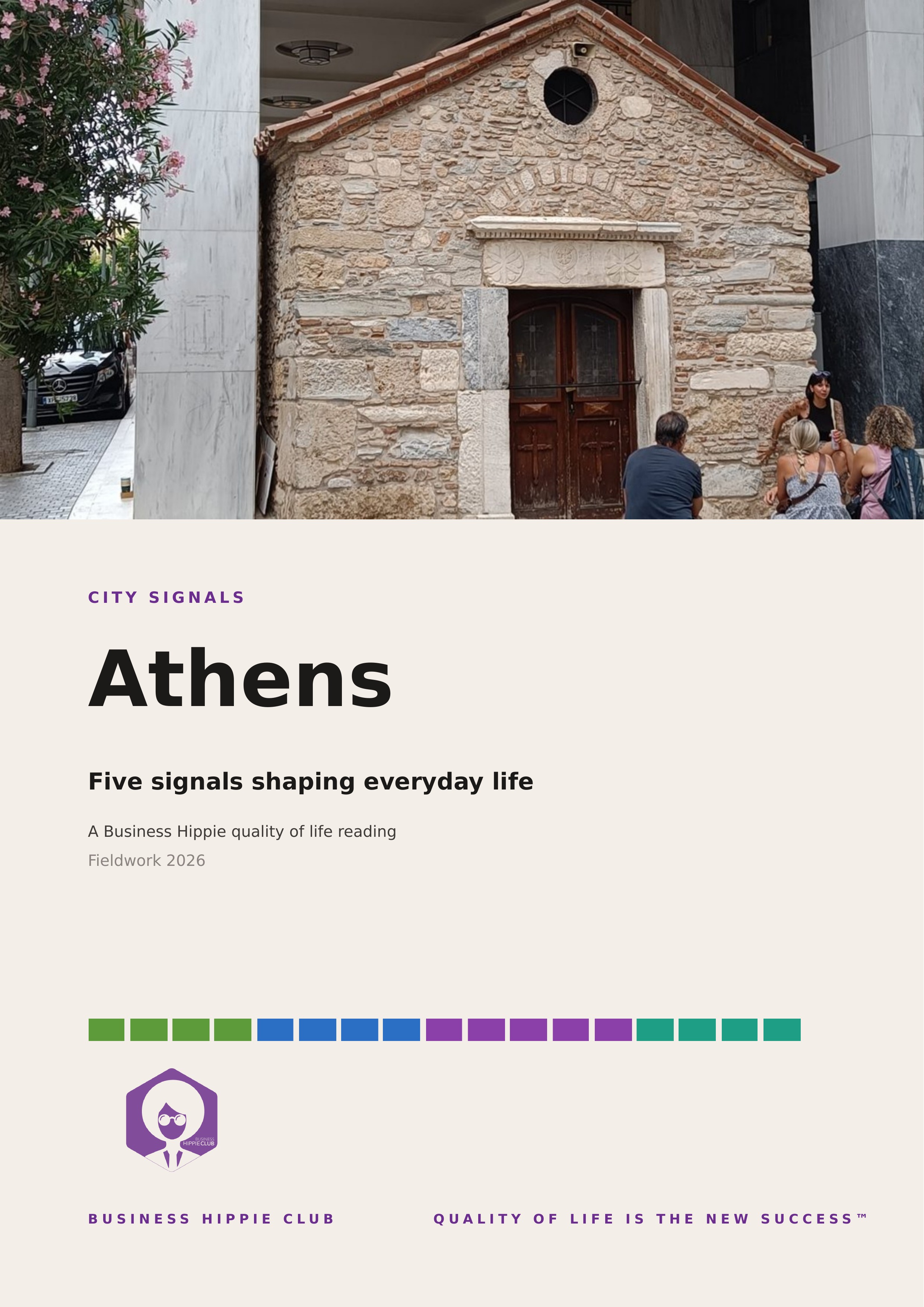
The family absorbs what the state doesn’t. Above the family, nothing catches you.
Publications · the short read from each Tour city
Numbers tell you what happened. People tell you why.
We look at quality of life through what people tell us, what we observe, and what the data shows.
Our publications bring these perspectives together to create a grounded reading of real life.
Many decisions rely on data that arrives late, or on assumptions about how people live, work and feel.
Human signals can reveal what is changing earlier. A shift in mood. A change in what people expect. The thing everyone in a place knows, but nobody has written down.
Put those signals next to the wider context, from policy and housing to tourism and transport, and a different picture starts to emerge. One that can help people act while it still matters.
The read of a city. Five signals, chosen because they came back often enough that I couldn’t call them anecdotes.
Each signal brings together what I noticed, what people told me, what the wider context reveals, and the question it leaves open.
Around twenty pages, made to be read rather than skimmed. Free.
The family absorbs what the state doesn’t. Above the family, nothing catches you.
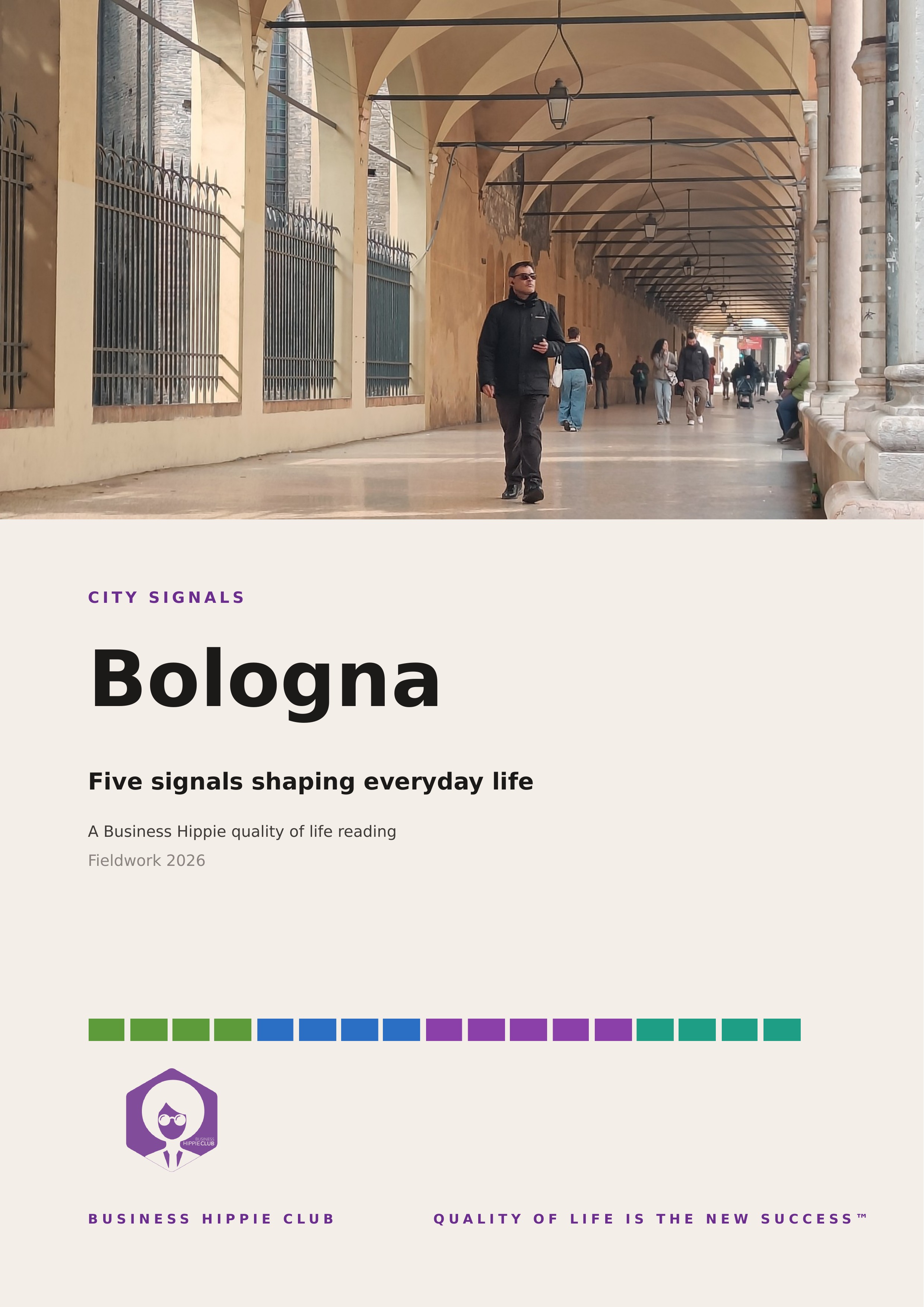
Almost nothing here has been lost yet. That is not the same as chosen.
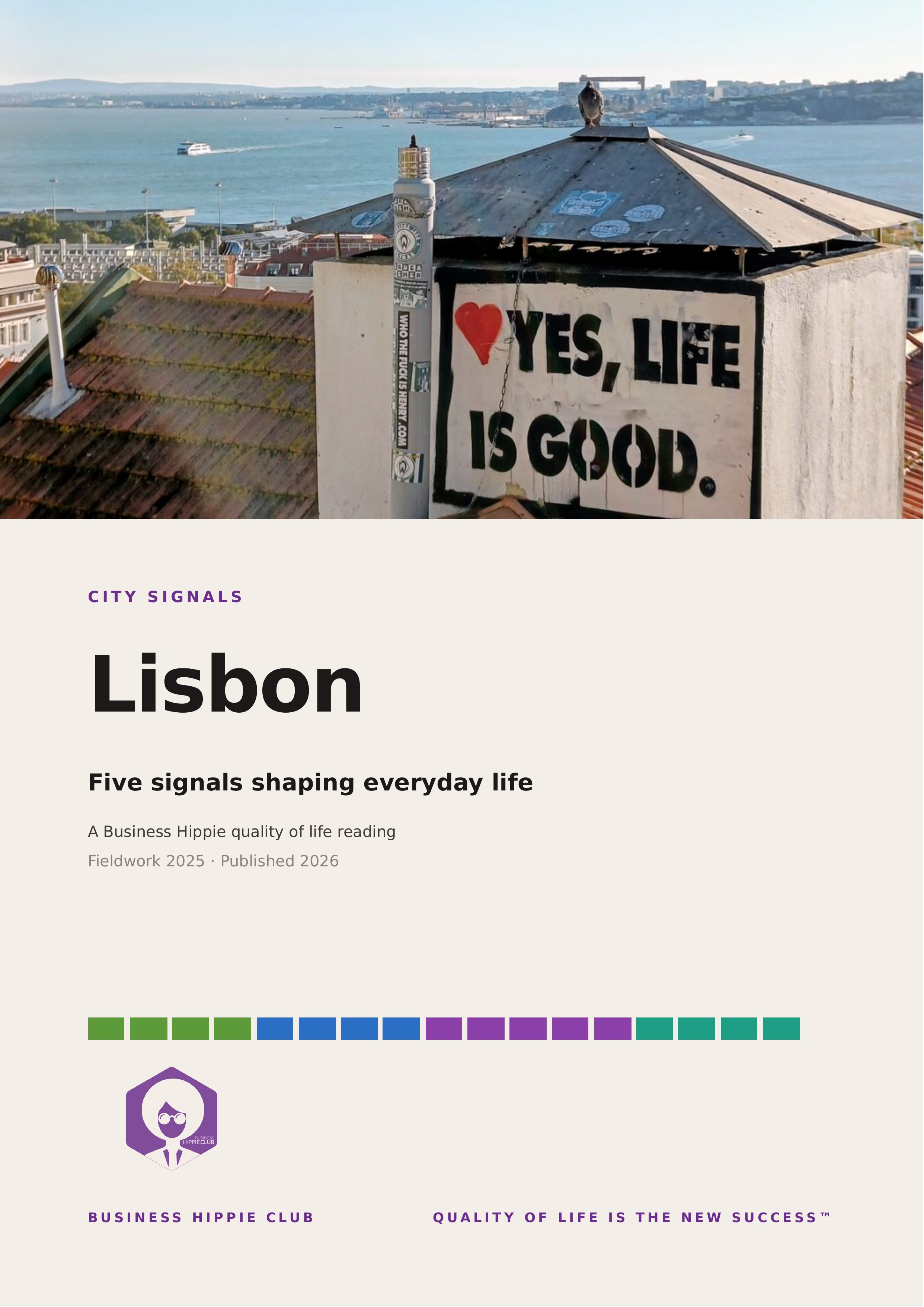
Winning the argument abroad. Losing it at the kitchen table.
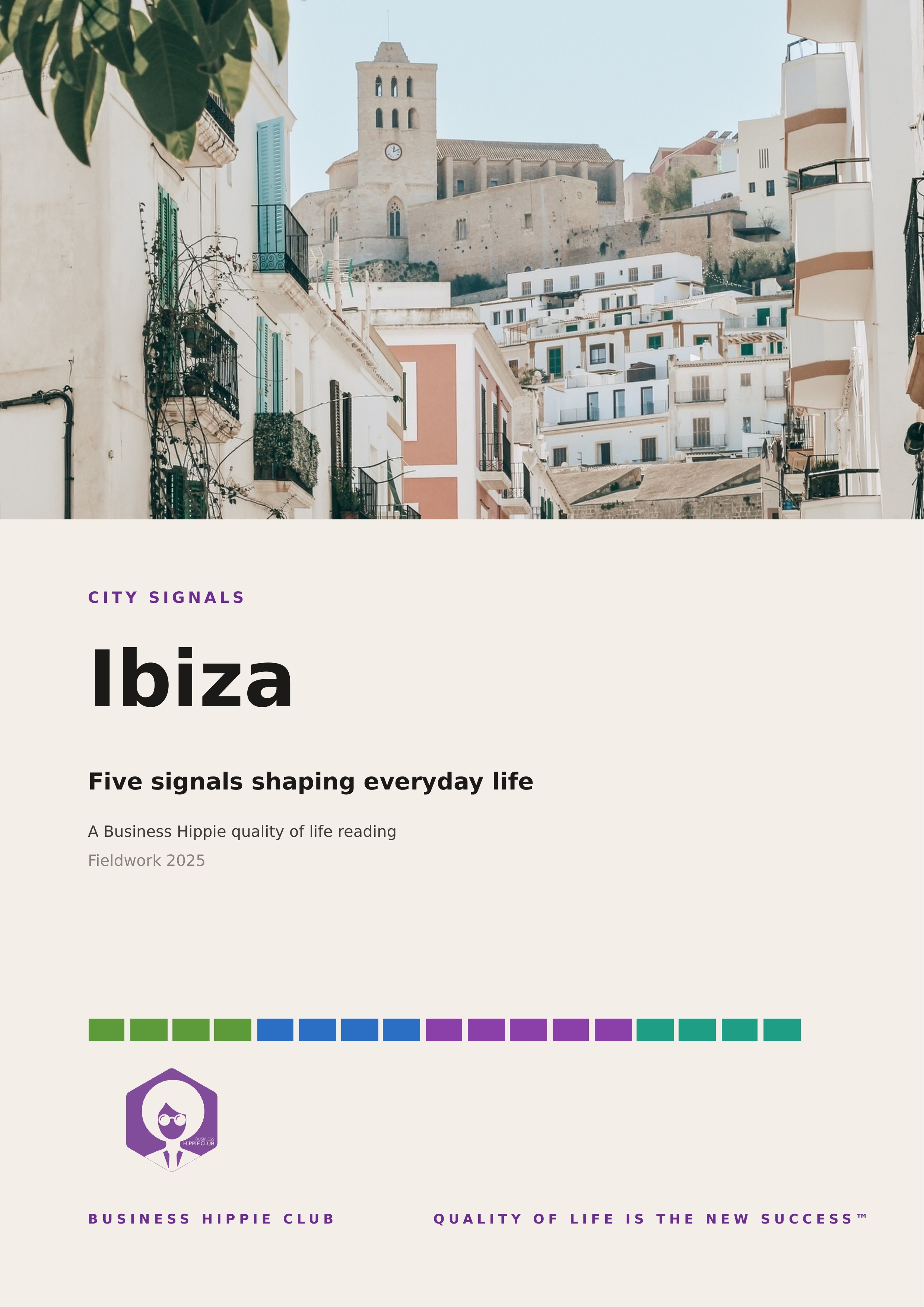
Nowhere is easier to belong. Nowhere is harder to stay.
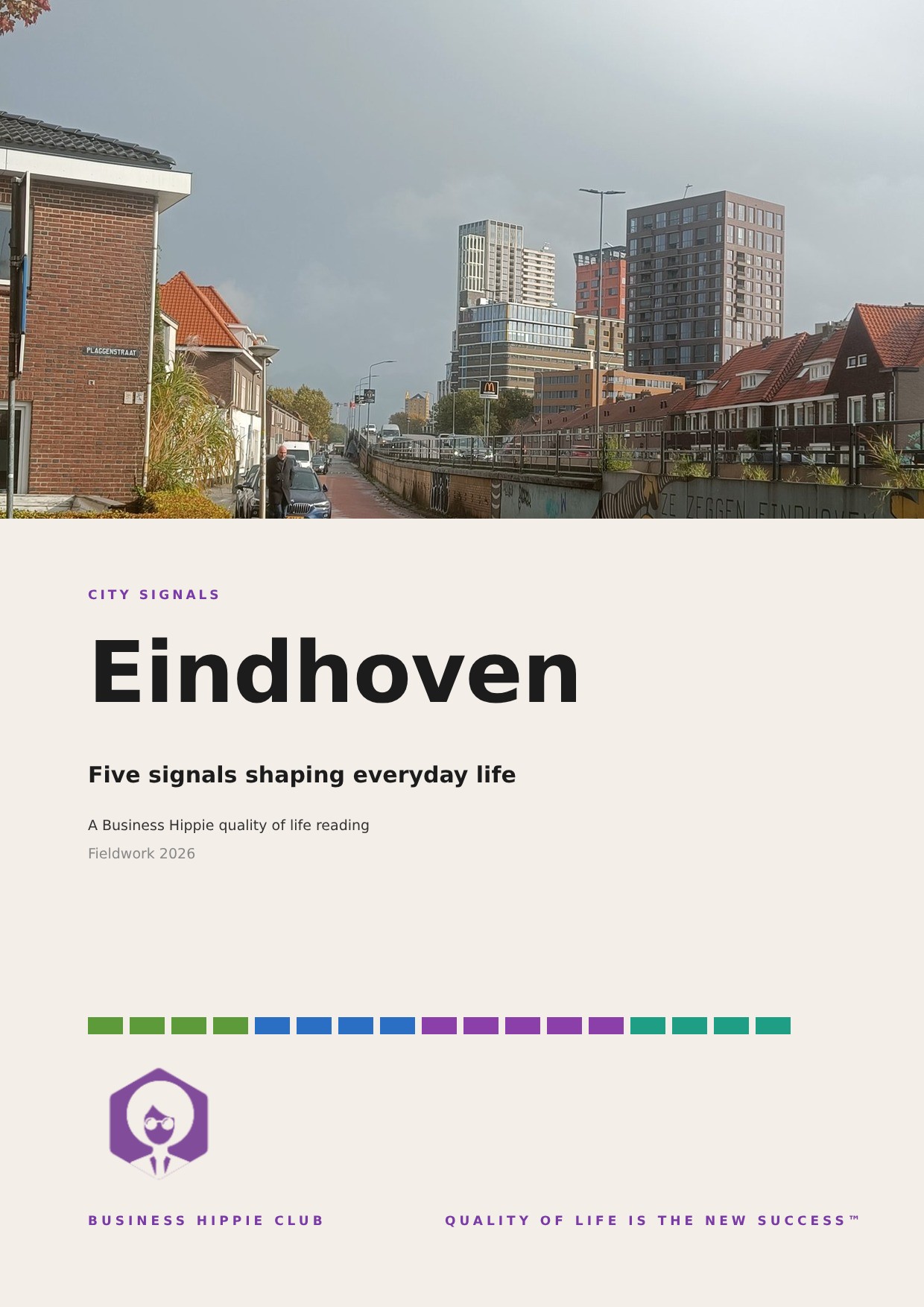
Built for the world economy. Lived in as a set of villages.
Our published signal reports are free to read. All five are online now.
Have a question about quality of life in your business, city or community? The same method behind these reports, pointed at your question.
From €15,000, scoped to your question. Travel and stay at cost.
In this short conversation, Hans explains how observation, conversations and context come together to create a grounded reading of quality of life.
Watch the conversation to see how a QOL report comes to life.
These reports are readings, designed to help people see what is happening, question what they assumed, and arrive at better questions.
Because quality of life isn’t built by reports. It’s built by people.
Sometimes a reading is the starting point for something more. A new idea, a different approach, or something that can be put into practice.