
BUSINESS HIPPIE CLUB
Bulåggna
BOLOGNA
City Signals
Bologna holds on to almost everything. It is less clear what it is holding on for.
QOL TOUR · FIELDWORK 2026
THE SHORT READ
Bologna
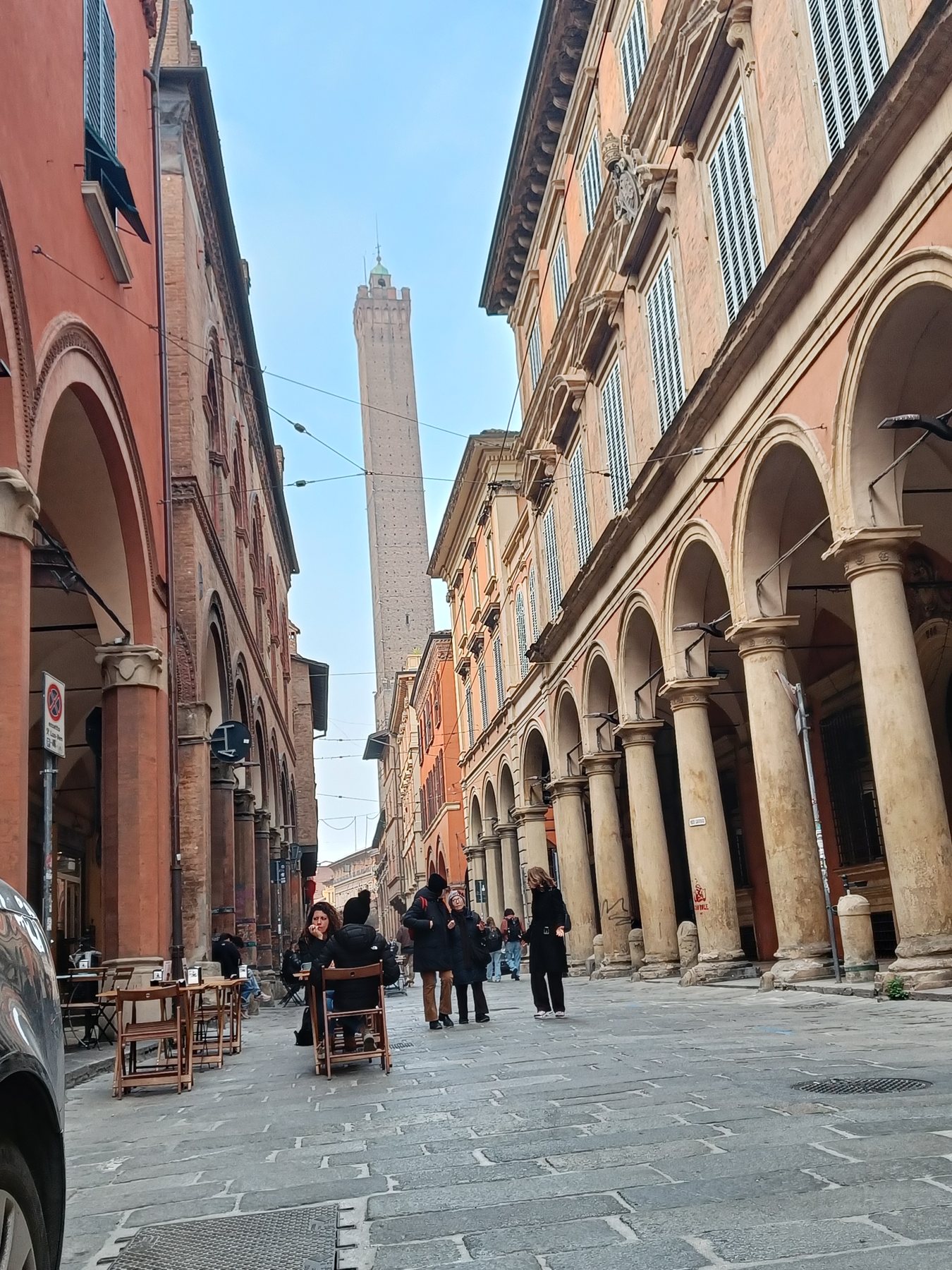
Bologna is a city of around 390,000 people in the north of Italy. Kilometres of covered arcades – the portici – so you can cross the whole place without getting wet. The oldest university in the Western world, with enough students in it to shift the average age of the street.
It arrives with a reputation. People point at Bologna the way they point at Copenhagen or Vienna – as a city that got the arrangement right.
I went to find out what the arrangement feels like from the pavement.
This is the short read. Five signals, drawn from a week of fieldwork and checked against public figures. It is not a full account of the city and does not try to be.
Rather than asking whether Bologna is a good or bad place to live, it asks a different question.
What is Bologna telling us about quality of life?
METHOD
How I work
This is field research, not market research. I go to a place, stay a while, and read it as an outsider with a city lens. It is part of the QOL Tour – the same method in every city.
Observation – Walking, sitting, watching how ordinary days are arranged. What gets maintained, who is out in the street, where money shows and where it does not.
Conversations – Coffeetalks. One to one, in cafés and on the street, with no agenda and nothing hanging on the answer. People say different things when nothing is riding on it.
Immersion – Living in the place at its own pace rather than visiting it. In Bologna this part was thin – see the note below.
A NOTE ON THIS READING
One week in Bologna. The method was the same as everywhere else on the Tour, there were simply fewer conversations behind it. A usual stay runs about three weeks.
So the five signals here are read mainly from observation and checked against public figures, with the coffeetalks as support rather than as the spine. They are real patterns. They are also the patterns a city shows a stranger in a week, which is not the same as the ones it shows its own.
Fieldwork was carried out in 2026. Context figures are the most recent available at the time of writing.
SIGNAL 01
Plain city. Rich region.
FEEL GOOD
"Chi si loda si sbroda." – He who praises himself spills down his front.
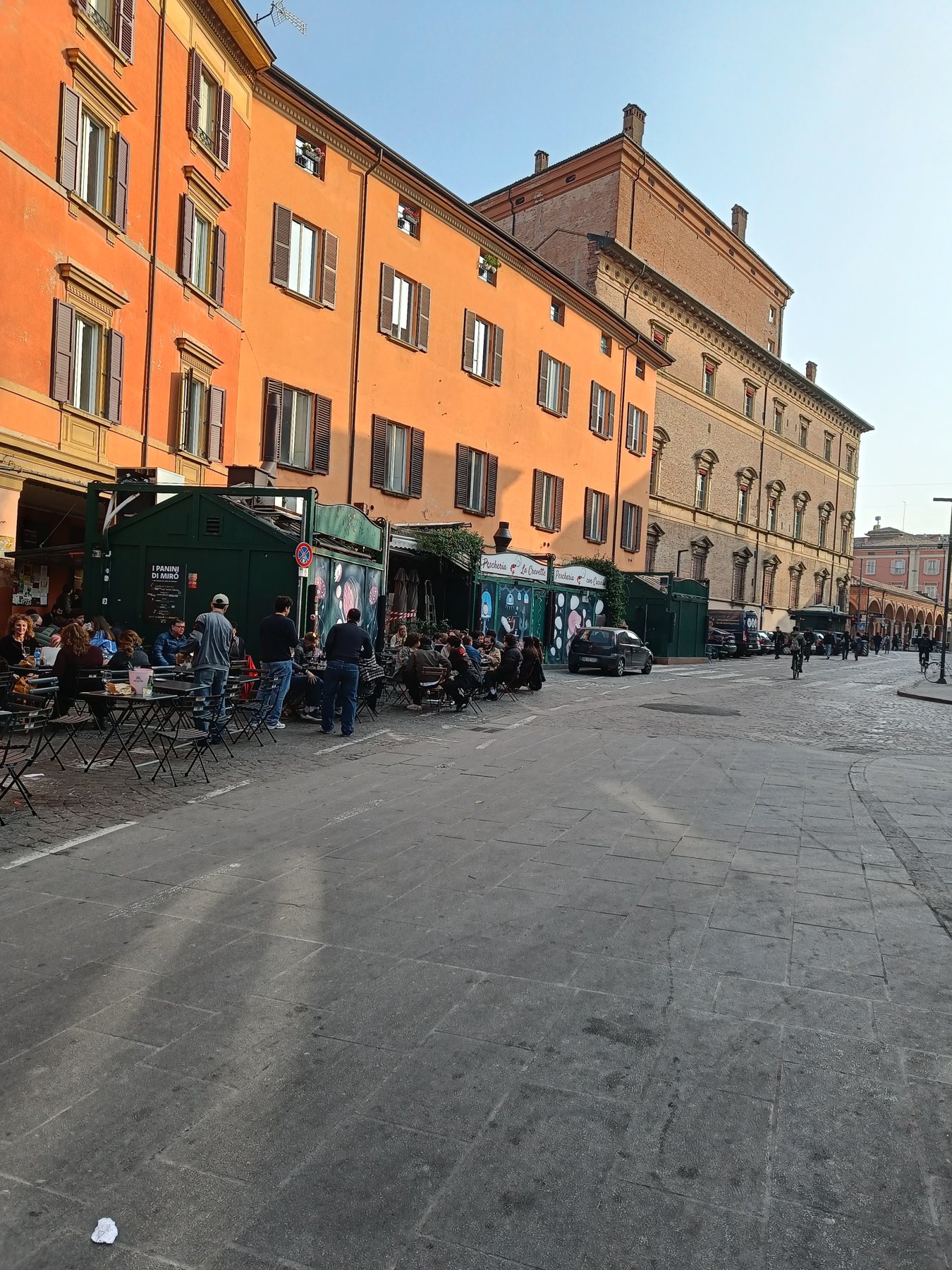
Bologna sits in one of the wealthiest parts of Italy and almost none of that wealth is on show. The luxury brands are inside a shopping mall. The good restaurants are not the expensive ones. You cannot read someone's income off their coat.
WHAT I NOTICED
- Bars and tables mix students, workers and pensioners with no adjustment in how anyone behaves.
- The city is scruffy in places and unembarrassed about it.
- Old habits are kept rather than upgraded – the market, the greeting, the same bar at the same hour.
- Conversation happens loudly and in public, with strangers well within earshot.
- Older people are out in the street in company rather than alone.
- Food is treated as a serious matter by people who are casual about everything else.
WHAT THE CONTEXT SAYS
Bologna province records the highest average declared income in Emilia-Romagna at €30,690 for the 2024 tax year, against €25,820 for Italy. The region ranks third nationally, behind Lombardy and Bolzano.
That money is not evenly held. The 8.8% of taxpayers declaring over €50,000 account for 29.4% of all income declared in the region.
Regione Emilia-Romagna, Servizio Statistica
Average declared income, 2024 tax year
WHAT THIS TELLS US
The money is there, held about as unevenly as anywhere else. What is different is that nobody spends it where you can see it.
Status here is expressed through participation, not through spend. That is a habit, not an outcome of equality, which makes it rarer and easier to lose than it looks.
LIVING GOALS IN PLAY:04 Enough instead of endless13 Belonging in an age of disconnection01 A life with dignity, for everyone
A QUESTION WORTH ASKING
For anyone opening a business in the centre:
does what you are building work for someone on an average Bologna wage?
SIGNAL 02
Owned together. Entered alone.
WORK GOOD
"L'unione fa la forza." – Unity makes strength.
Bologna answers a question most cities never manage. The money made here largely stays here – cooperatives, family firms, profits reinvested rather than extracted.
The cost is a boundary. Keeping wealth inside means deciding who is inside.
WHAT I NOTICED
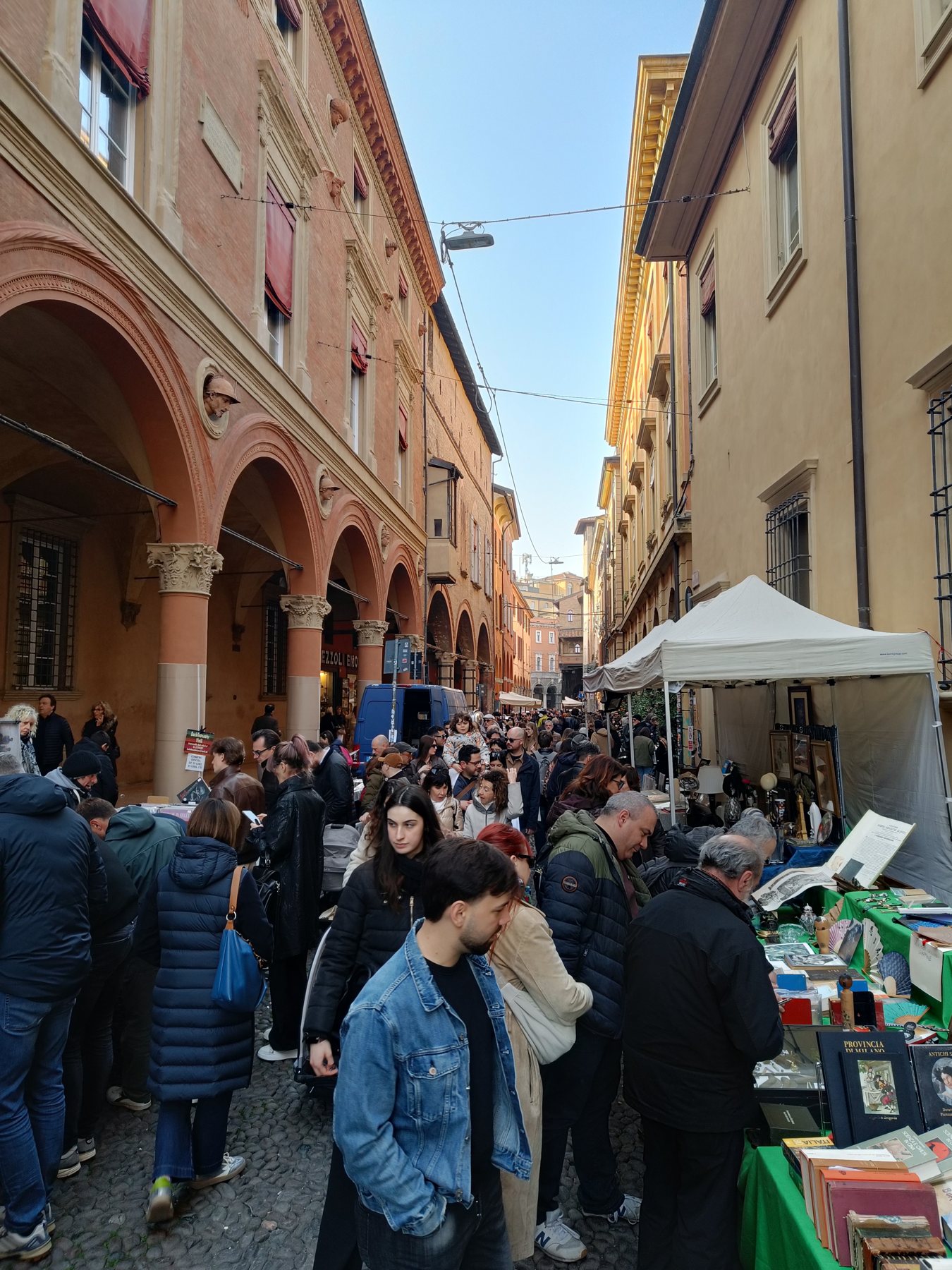
- Businesses point you towards other businesses instead of trying to keep you.
- Businesses are small. The scale is micro and stays micro on purpose.
- The same family names surface across unrelated trades.
- People describe themselves as individualist, then say they are looking for community. Both in the same breath.
WHAT THE CONTEXT SAYS
Co-operatives associated with Legacoop Bologna employed 45,119 people in 2024, with 87% on permanent contracts – two points above the regional average. Their aggregate production value was €14.16bn, and net worth reached €3.8bn, held as an indivisible reserve that cannot be distributed to members. They also let 3,513 homes at around 60% below market rent.
Legacoop Bologna – members only, so the full local sector is larger
What the structure delivers
WHAT THIS TELLS US
Co-ownership buys quality of life directly. Secure contracts, homes well below market, money locked in for the next generation of workers. That is the ownership structure doing it, not goodwill.
What it does not buy on its own is belonging. You can live in a city of members and still arrive as a non-member.
LIVING GOALS IN PLAY:09 A fair exchange for your time07 Work that supports life, not drains it13 Belonging in an age of disconnection
A QUESTION WORTH ASKING
For the co-operative movement here:
the workers you need next are arriving from abroad. Members, or staff?
SIGNAL 03
Loved by the people leaving.
LIVE GOOD
"Chi lascia la via vecchia per la nuova sa quel che lascia e non sa quel che trova." – Leave the old road for the new one and you know what you left, not what you'll find.
Nobody I met had a bad word for Bologna. Nobody wanted to go.
They are going anyway. Outward, to the belt towns, on price.
WHAT I NOTICED
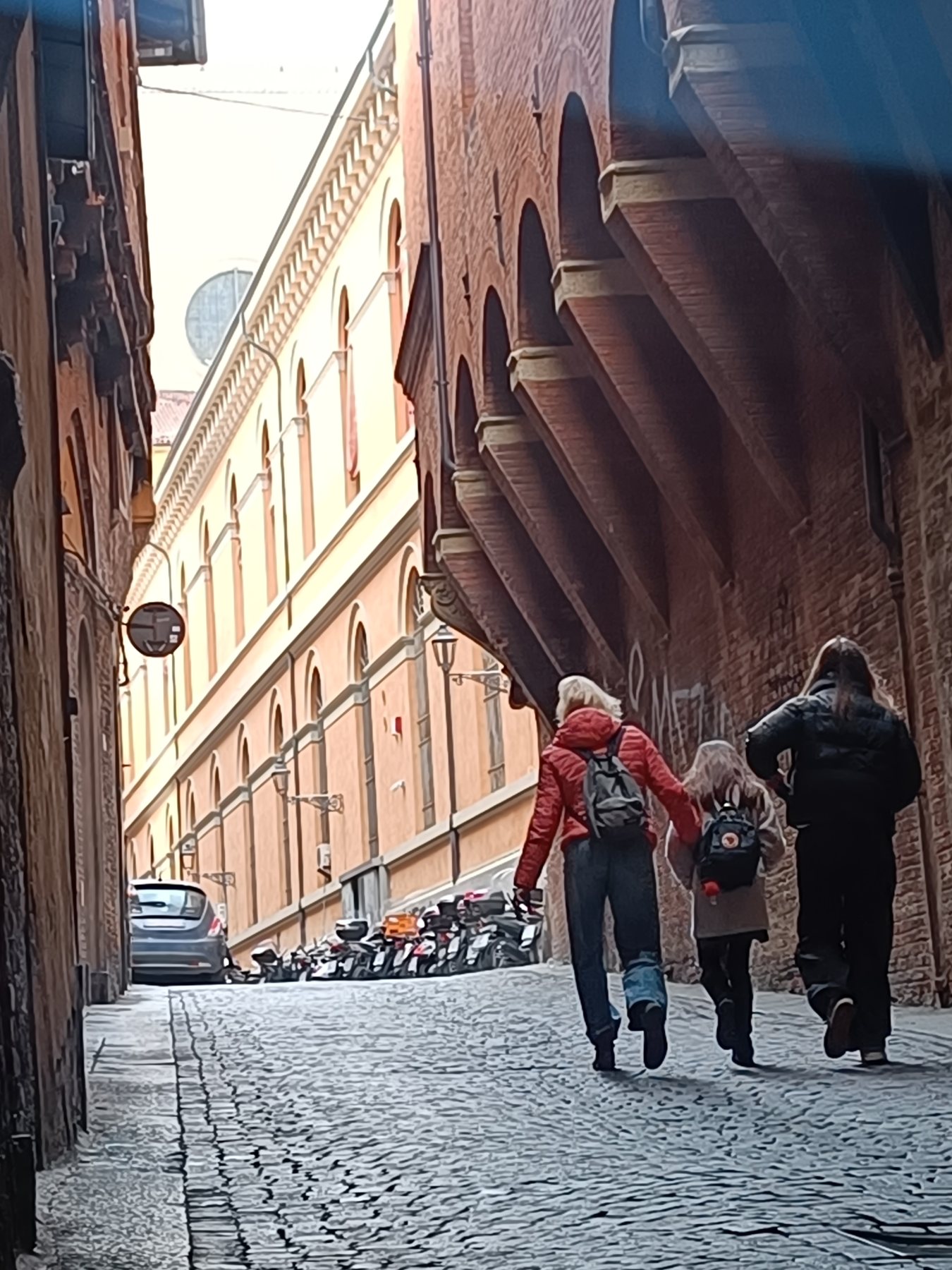
- The move is short – belt towns twenty minutes out, with the same people commuting back in for work and study.
- Students feel the rents first and hardest.
- The city is visibly young. The housing conversation is about whether it stays that way.
- People who have moved out still say "we" about Bologna.
WHAT THE CONTEXT SAYS
A single room in Bologna now averages €599 a month, the fourth most expensive university city in Italy behind Milan, Florence and Rome. Rents here have risen with everywhere else, and wages have not.
Immobiliare.it; HousingAnywhere; Confabitare
Average single room, March 2026
WHAT THIS TELLS US
Bologna is not losing its appeal. It is losing the people who feel it.
LIVING GOALS IN PLAY:02 Basic living conditions for everyone03 Places built for humans12 Time to truly live
A QUESTION WORTH ASKING
For the city council:
how many of the people who love this city can afford to stay in it?
SIGNAL 04
Beautiful in front. Deferred behind.
LIVE GOOD · DO GOOD
"Tirare a campare." – Getting by.
The old buildings and the public health service are both running behind.
What is worth noticing is how little either is treated as a scandal.
WHAT I NOTICED
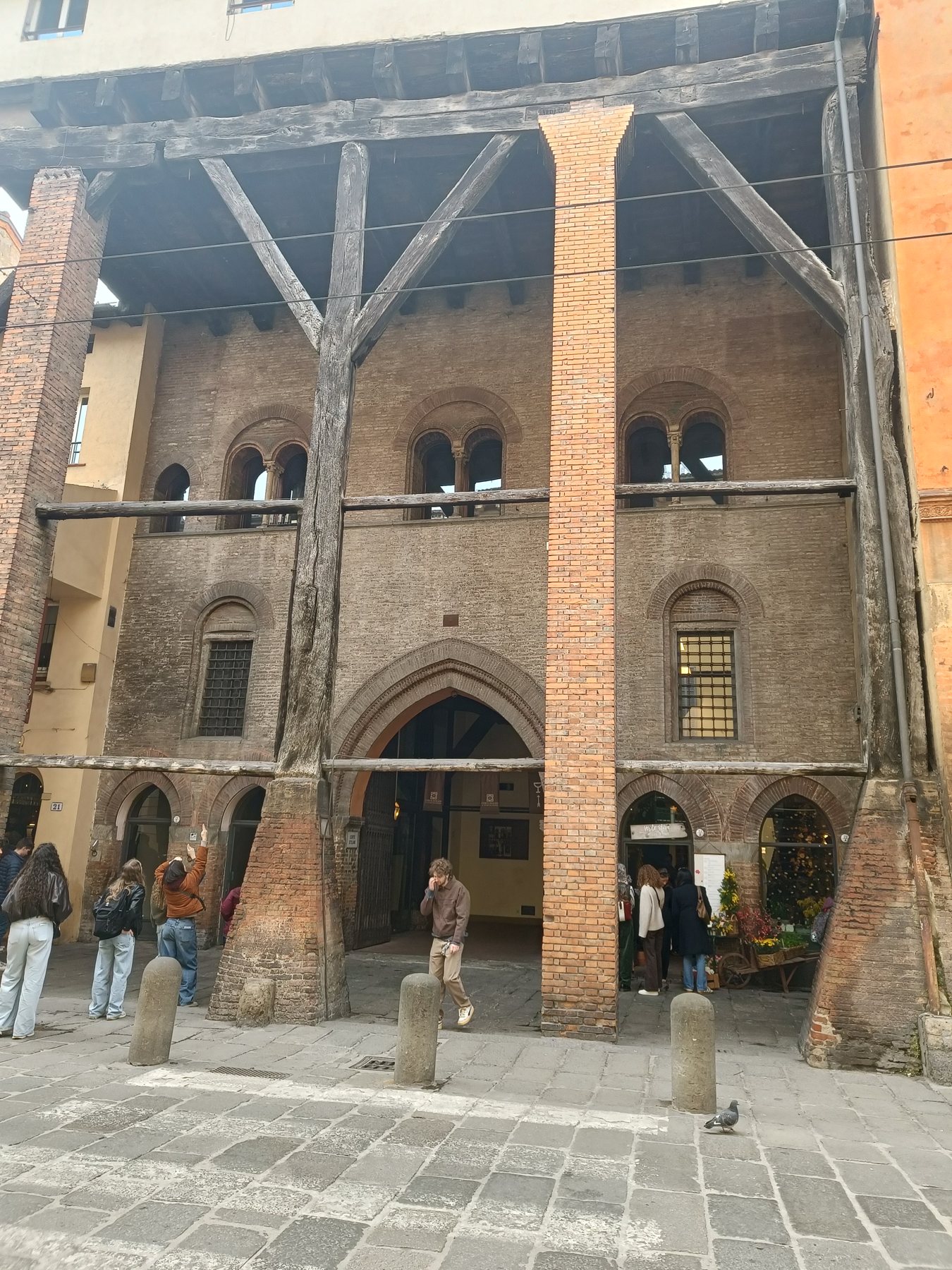
- The state of the buildings gets mentioned the way people mention the weather. Noted, not complained about.
- The music and art scene occupies exactly the buildings the city has not got round to fixing.
- Paying for private healthcare is described as a practical step rather than a political one. Nobody frames it as giving up on the public system.
- Money goes into new shopfronts, signage and interiors while the buildings holding them stay unrestored.
WHAT THE CONTEXT SAYS
One person in ten in Italy went without medical care in 2024. That was one in sixteen before the pandemic. Waiting times have overtaken cost as the main reason, and nearly a quarter of people now pay for private treatment out of their own pocket.
Emilia-Romagna is not broken out separately, and it still draws patients in from other regions rather than losing them. The pattern Bologna shows is the national one arriving in a place that used to be the exception.
ISTAT, 2024
People in Italy who went without medical care
WHAT THIS TELLS US
The buildings and the public health service are both being run down by degrees, and nobody chose it.
Every private workaround is reasonable on its own. Together they are the decision no one made.
LIVING GOALS IN PLAY:03 Places built for humans05 A body that carries you through the day15 Progress that feels human
A QUESTION WORTH ASKING
For the region:
at what point does a workaround become the system?
SIGNAL 05
Old revolt. New question.
DO GOOD
"Ora e sempre resistenza." – Now and always, resistance.
The habit of protest is intact.
What it aims at is harder to find.
WHAT I NOTICED
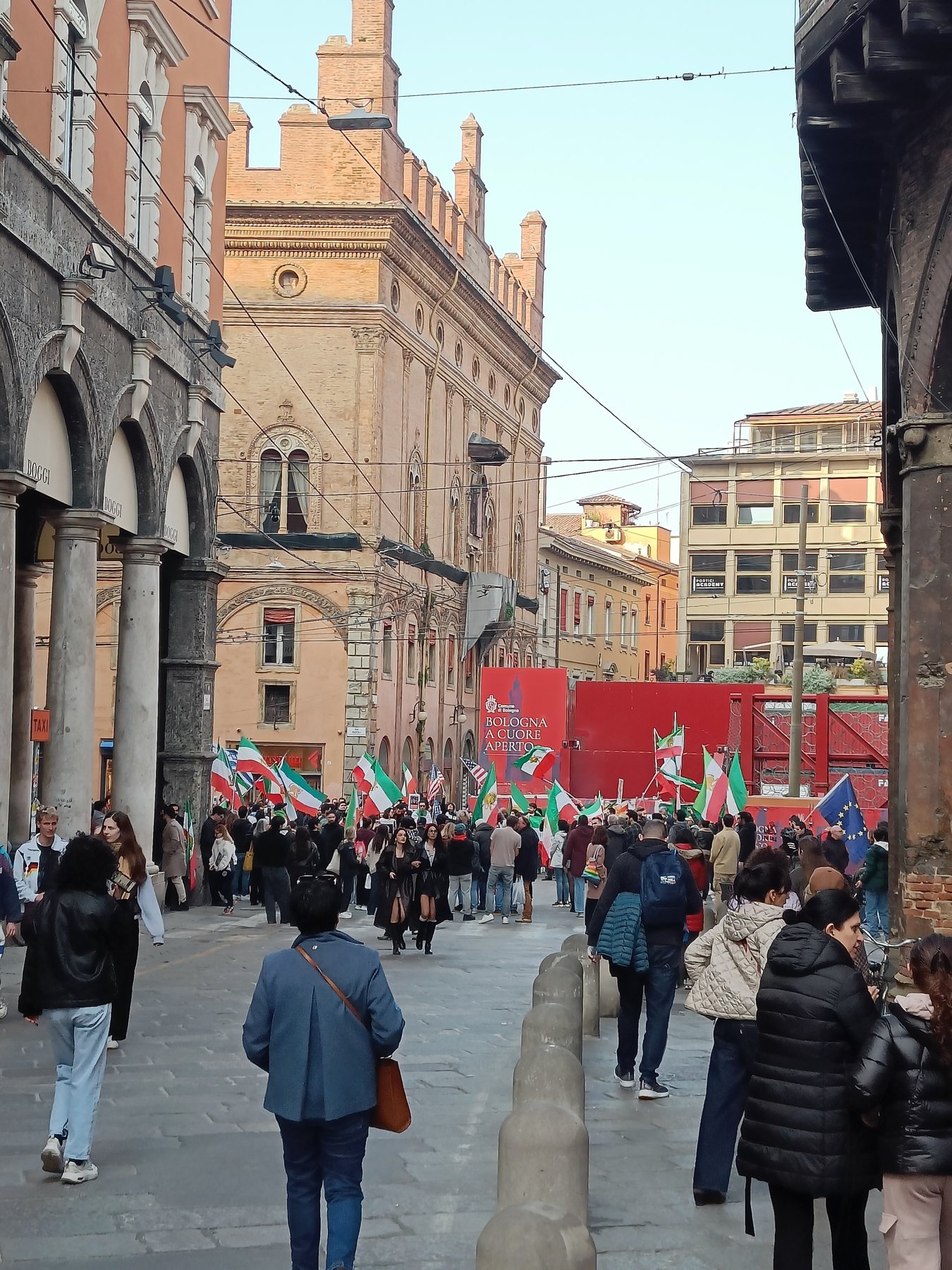
- Political writing on walls is permanent furniture, not an event.
- Demonstrations belong to the ordinary week rather than to a crisis.
- Locals raise the question of what Bologna is now before a visitor thinks to ask it.
- The left history is narrated with pride and in the past tense.
- Tourism arrived recently and fast, and the city has not settled on an answer to it.
WHAT THE CONTEXT SAYS
Bologna recorded 1,455,589 arrivals between January and August 2025, up 7.6% on 2024, with international visitors at 61% of city arrivals. Second-quarter overnight stays rose over 8%, putting Bologna alongside Milan and Florence while Venice fell 6.1%.
Bologna Welcome; ISTAT
Where Bologna's visitors came from, Jan–Aug 2025
WHAT THIS TELLS US
The willingness to act together is intact here, and that is rarer than it sounds.
What decides whether it improves anyone's life is having something specific to point it at.
LIVING GOALS IN PLAY:14 A say in your own life17 Belonging to a larger whole15 Progress that feels human
A QUESTION WORTH ASKING
For anyone organising here:
what would you defend now that you were not defending twenty years ago?
WHOLE-CITY READ
The four pillars
Live Good
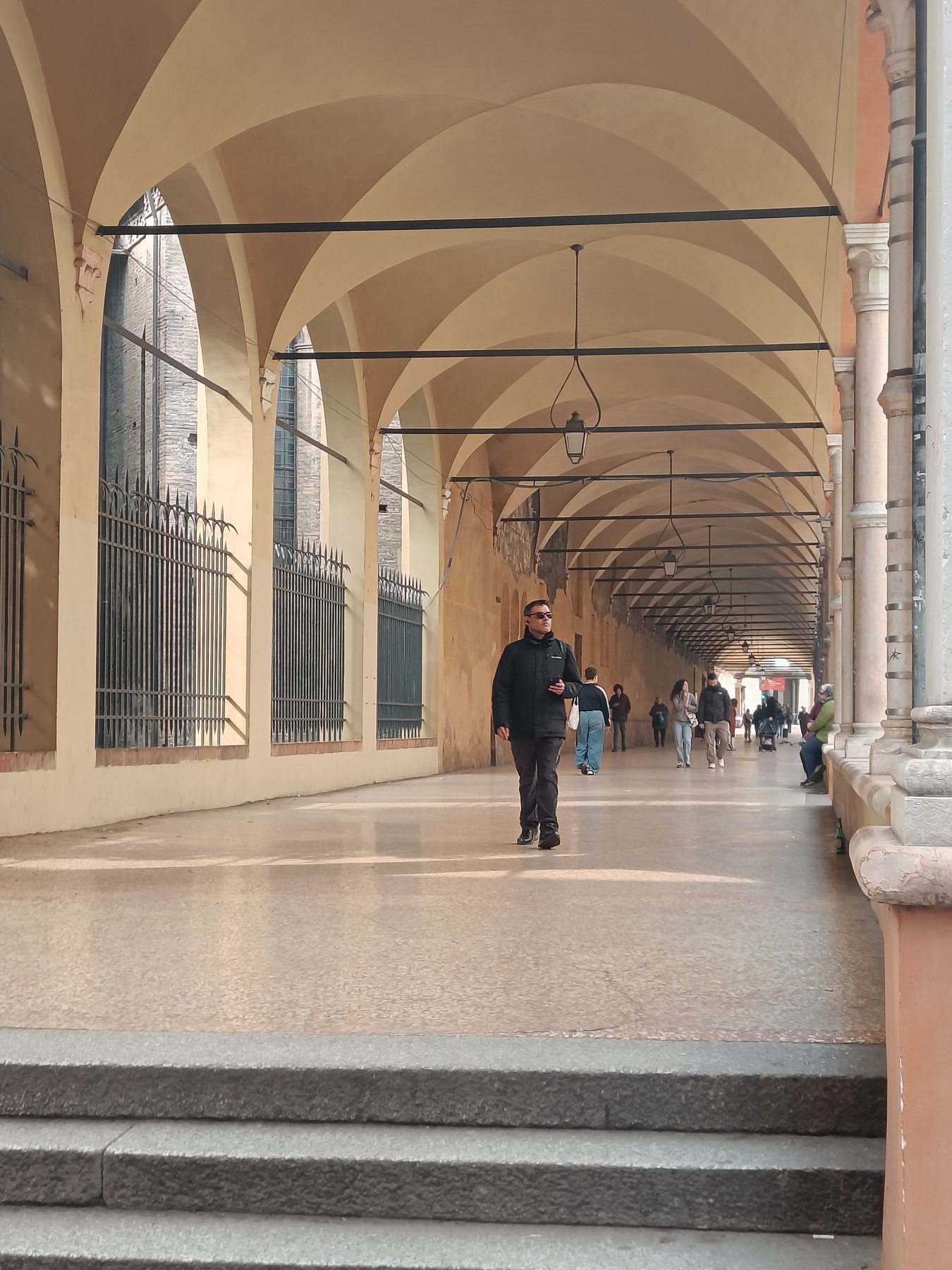
The city is built for people and still works at walking pace. What it cannot do any more is house the people who want to stay in it, and the fabric they live in is going quietly unmended.
Work Good
The strongest pillar here, and not by accident. Co-ownership delivers secure contracts and affordable homes as a matter of structure rather than goodwill. The open question is who gets inside it next.
Feel Good
Daily life is sociable, unhurried and cheap to join. Nobody is performing wealth, so nobody has to keep up. People still describe themselves as individual and still go looking for company.
Do Good
The instinct to act together survives intact, which is rare. It is pointed at less than it used to be, and the shared account of where the city is going has not been rewritten to match what the city now is.
IN ONE LINE
Bologna holds on to almost everything. It is less clear what it is holding on for.
LOOKING AHEAD
Where this points
Three things I would look at next, if I were staying.
01 THE ORDINARY MIDDLE IS THE ASSET
What most European cities have already lost is a place where average money buys a good life and the wealth made locally stays local. Bologna still has it. It is worth naming as an achievement before it is discussed as a problem, because once it goes, nothing in the current toolkit brings it back.
02 KEEPING IS NOT DECIDING
The buildings are kept and not repaired. The revolt is kept and not aimed. The wealth is kept and the boundary around it hardens. The people are kept right up until the rent, and then they are twenty minutes out, still saying "we". Each of those is a decision nobody made. They are all reversible while they are still habits.
03 THE MEMBERSHIP QUESTION IS THE NEXT ONE
Everything Bologna does well runs through belonging to something – a co-op, a family firm, a neighbourhood, a political history. The people the city needs next are arriving from outside all of it. How the membership opens, or does not, decides more about the next twenty years here than any housing figure.
Nobody I met disagreed that these are the questions. Nobody claimed to own them either.
THANK YOU
To everyone who sat down
To everyone in Bologna who gave me half an hour over a coffee and answered honestly when nothing hung on the answer – thank you. A week is not long, and you made it count for more than it should have.
If you live here and I have read something wrong, I would rather hear it than not. That is how the next reading gets better.
The QOL Tour asks one question in every city, of residents and of the people who work there: how is it to live and work here? Bologna is the fourth city.
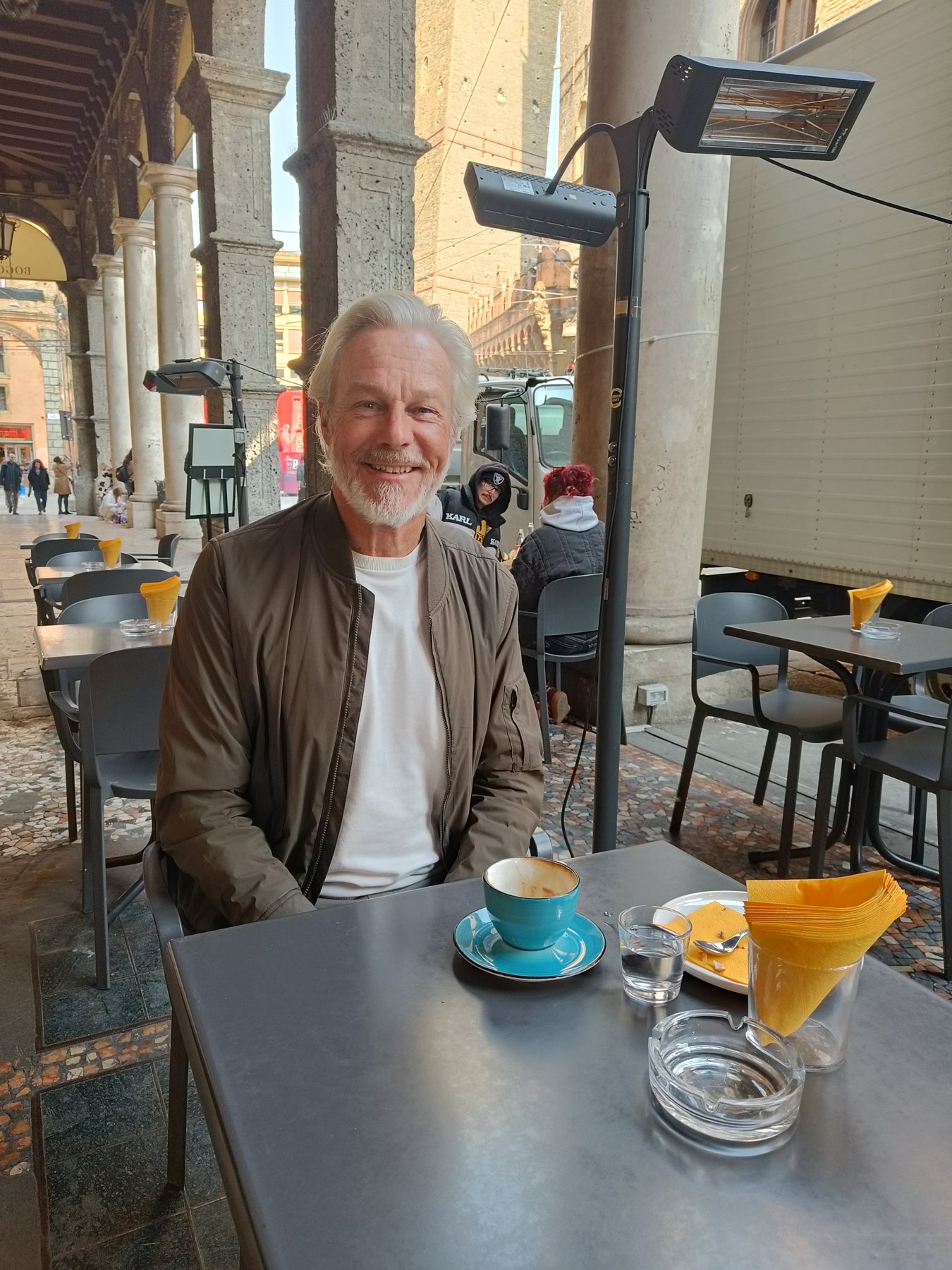
 Hans van de RaktBusiness Hippie Club · businesshippie.club
Bologna City Signals · Fieldwork 2026